03 / PROGRAMME

Applied Science for Life Sciences and Biotechnology

Bridging Theory and Industry • For Undergraduates & Postgraduates

Strong textbook knowledge is only the beginning. We help life sciences students build the data, communication, and industry capability needed to make that knowledge work in the real world.

Partner With Us
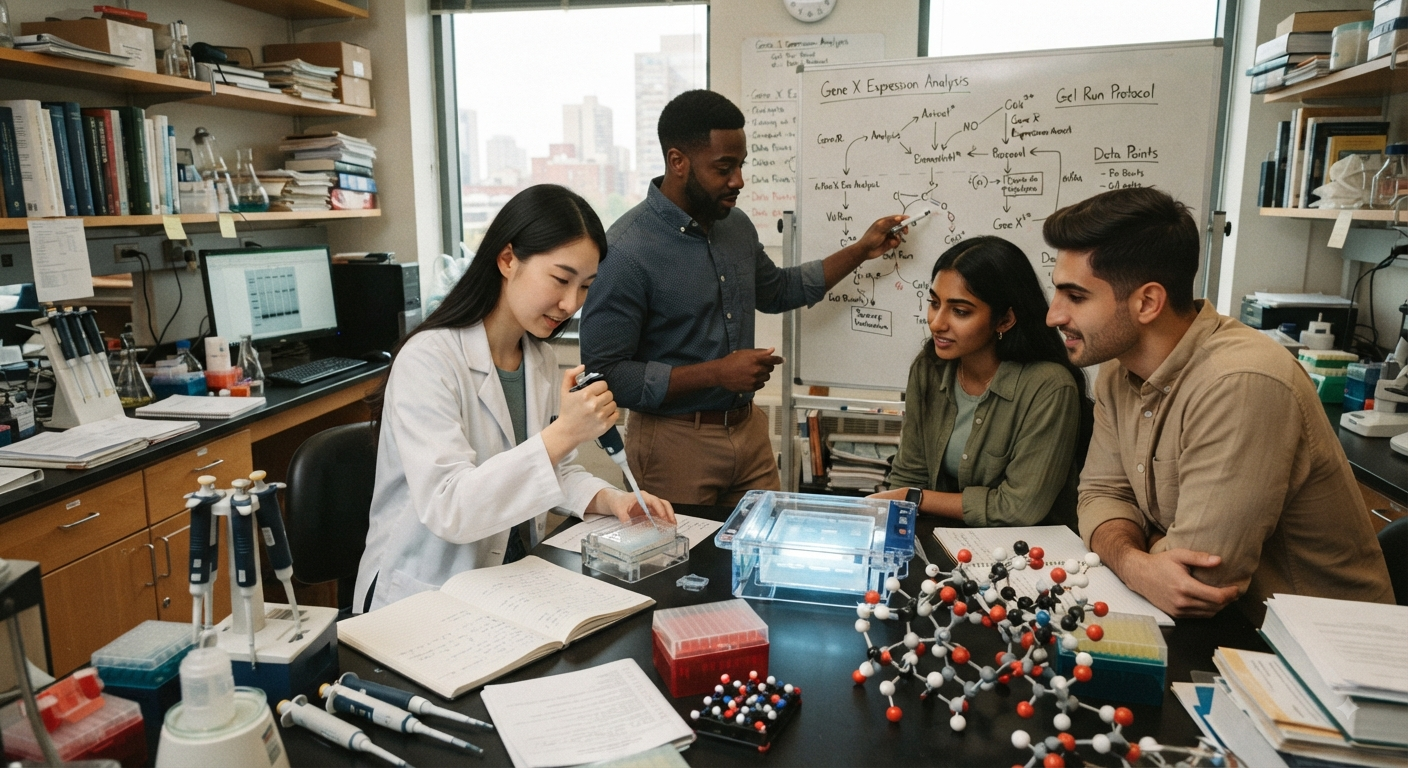
Life sciences students working with applied science
DATA
SCIENCE
INDUSTRY

Life sciences students typically graduate with strong textbook knowledge but weak applied capability.

They know the biology inside out, but struggle with the data, communication, and professional contexts where that knowledge must actually live.

More lectures aren't the answer.

We look at the practical deficits that hold life sciences graduates back from securing serious industry or research roles, and we eliminate them.

From knowing science to applying science.

Built Around Industry Deficits

The programme focuses on three practical deficits that determine whether scientific knowledge can move beyond the classroom.

01

Data Literacy for Life Sciences

Moving beyond memorization to read and interpret real experimental data, understand statistical significance in biological research, and gain a basic bioinformatics orientation. Students learn what genomic data looks like and how it is manipulated.

02
Aa

Research Communication

Translating complex science. Students learn to write scientific summaries that non-specialists can understand, present findings with clarity, and understand how scientific knowledge moves from laboratory research to commercial product or public policy.

03

Industry Orientation

Demystifying the market. Students learn how biotechnology companies actually operate, how research moves toward application, and what roles life sciences graduates can realistically fill and build toward.

The Programme Architecture

The Student Development Programme integrates seamlessly into the college calendar, delivering deep, portfolio-grade capability within a single semester with minimal scheduling friction.

01
THE DIAGNOSTIC

The Pilot

Before committing, we run a single, one-day workshop on your campus for 20 to 40 selected students from the relevant departments.

The session is intentionally diagnostic. Students and faculty see the gap between academic theory and industry reality with total clarity.

02
THE DEEP DIVE

The Core Programme

Running across one semester (approximately 5 months), students participate in three 3-hour sessions per month.

15 SESSIONS TOTAL
Conceptual frameworks + hands-on applied project work
03
THE PORTFOLIO

The Capstone

The final month is dedicated entirely to a structured, real-world project.

Students apply the data, communication, and industry skills they have acquired to produce a professional presentation or report designed to sit in their career portfolio.

REAL-WORLD
PROJECT
→ PORTFOLIO

Don't just learn it. Build something with it.

The capstone brings the entire programme together. Students move from understanding concepts to applying them in a structured, real-world project.

The final presentation or report becomes a tangible demonstration of what they can actually do — not simply what they know.

DATA COMMUNICATION INDUSTRY CAPABILITY

What Colleges Can Expect

Colleges that partner with Chaos Theory don't just add a line item to their prospectus; they secure documented institutional growth.

01

Applied Capability

Students who are demonstrably more capable of executing tasks in their discipline's practical context by the end of the programme.

02

Stronger Placement Outcomes

Graduates who can actively demonstrate strategic thinking, technical data skills, and clear communication in interviews, rather than simply reciting textbook facts.

03

Accreditation-Ready Data

Comprehensive, verified documentation of each cohort's measurable growth, formatted specifically for institutional accreditation and outcome reporting.

04

Institutional Differentiation

A distinct, high-caliber co-curricular offering that attracts serious students and positions the campus as industry-forward.

From textbook knowledge to industry capability.

Give your students the opportunity to take their scientific knowledge beyond the classroom and into the professional world.

Talk to Chaos Theory